
Holocaust Survivor Program Focuses on How the Immigrant Experiences Shape Aging
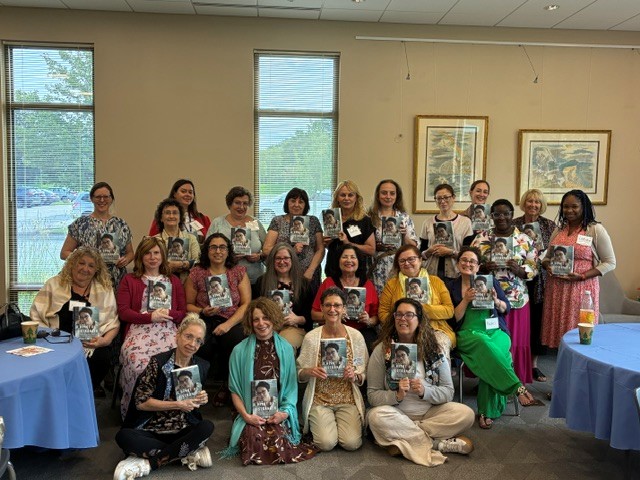
JSSA and Jewish Community Services in Baltimore care managers who help almost 300 Holocaust survivors age in place and feel part of the Jewish community joined together August 14 for their fourth annual staff retreat.
The theme of the daylong event held at Temple Isaiah in Fulton was “Heart of a Stranger: How the Immigrant Experience Shapes Aging.” It was organized by Deborah Adler, JSSA’s Holocaust Survivor Program Manager, and Beth Hecht, Senior Manager of Aging Services at Jewish Community Services.
The two leaders chose the day’s theme after being inspired by Rabbi Angela Buchdahl of the Central Synagogue in New York. Her book, “Heart of a Stranger” details her upbringing with a Korean Buddhist mother and a Jewish American father. Buchdahl graciously sent a video of welcome and thanks to the retreat participants as well as signed copies of her book.
Senior Rabbi Craig Axler of Temple Isaiah stressed the need for “empathy, not sympathy” when treating strangers. “We are commanded to love our neighbors in the Torah,” he said.
Eliane Lape, Senior Program Officer from the Claims Conference, addressed the group by video, answering questions from participants, many of whom expressed their gratitude for her work.
Rabbi Ben Shalva, Manager of Jewish Care at Gilchrist Hospice in the Baltimore area, addressed the group in person concerning grief and loss through the lens of the immigrant experience. He visits Holocaust survivors, some of whom are under hospice care. “Clients carry their losses everywhere,” he said, pointing to their “accumulation of losses.”
Participants also spent time in break-out groups, sharing with their fellow care managers how they handle their own secondary grief and how the current rise in antisemitism brings back horrible memories for their clients. Each care manager has a caseload of between 40 and 50 survivors, whom they call weekly and visit quarterly.
They discussed times when they, like the people they serve, felt like outsiders due to their religion, a move to a new community, and even support of sports teams.
More than 94 percent of clients served by the two organizations emigrated to the United States from the former Soviet Union, most of them after the Soviet Union’s collapse.